
Komarova U. V. Cartography of the Archaeological Study of the Ananyino Culture Sites in the Vyatka River Basin
Ulyana V. Komarova
Kirov Regional Museum of Local Lore named after P. V. Alabin, Vyatka State University
Kirov, Russia
E-mail: komarovau546@gmail.com
ORCID: 0009-0005-8521-292X
 Download | Back to the Content № 1. 2025
UDC 902.2(470.342):528.9
DOI: 10.58529/2782-6511-2025-4-1-38-49
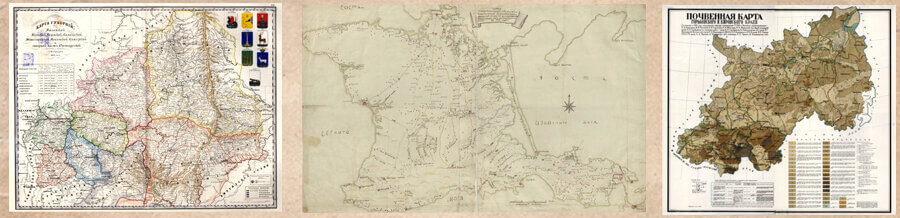
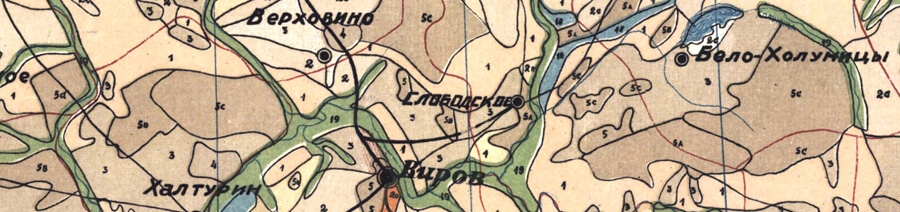
ABSTRACT. The article provides an overview of significant studies of the Vyatka-Vetluga Ananyino cultural and historical area (AKIO), as well as a description of the chronology of the discovery of these sites in the Vyatka River basin. The author uses the mapping method to visualize the distribution of the AKIO sites. The cartographic method serves as a tool not only for displaying and analyzing data, but also for identifying the relationships between sites, determining their density and the dynamics of discovery over time. The article illustrates the author’s research with three maps, each of which is presented with a specific purpose. The first map shows the routes of the main expeditions from the 18th to the 20th centuries. The second map shows the discovery dates of the sites. The third map visualizes the distribution of the AKIO sites depending on soil conditions. In addition, this study is aimed at systematizing knowledge about AKIO and identifying trends in its study. There are several criteria for structuring the material: the type and name of the site, its dating, the researchers involved in the study, the total area of the monument and the area studied. These data enable accurate tracing the development of archaeological research in the Vyatka River basin from the very first discovery to the present day. The article highlights the importance of the cartographic method in the context of archaeology, demonstrating how data visualization can facilitate the identification of patterns and trends in the distribution of the Ananyino culture sites.
KEYWORDS: early Iron Age, Ananyino cultural and historical area, Vyatka-Vetluga AKIO, historiography, cartography, Vyatka River
For citation: Komarova U. V. [Cartography of the Archaeological Study of the Ananyino Culture Sites in the Vyatka River Basin]. Istoriko-geograficheskiy zhurnal [Historical Geography Journal], 2025, vol. 4, no. 1, pp. 38–49. DOI: 10.58529/2782-6511-2025-4-1-38-49 (In Russian).
Received 12 December 2024
Accepted 6 March 2025
© 2025 The Author
REFERENCES
- Chernykh E. M. [Buyskoye Hillfort on Vyatka River in the Research Biography of L. I. Ashikhmina (In Memoriam of the Archaeologist)]. Povolzhskaya arkheologiya [The Volga River Region Archaeology], 2024, no. 3 (49), pp. 128–137. DOI: 10.24852/pa2024.3.49.128.137 (In Russian).
- Chizhevsky A. A., Chernykh E. M., Khisyametdinova A. A., Mitryakov A. E., Spiridonova E. A., Kochanova M. D., Aleshinskaya A. S. Skornyakovskoye gorodishche na Vyatke [The Skornyakovskoye settlement on the Vyatka River]. Kazan: Izdatel’skiy dom “Kazanskaya nedvizhimost” Publ.; Institut arkheologii im. A. Kh. Khalikova AN RT Publ., 2016. (Archaeology of the Eurasian steppes; iss. 22). (In Russian).
- Chizhevsky A. A., Orudzhov E. I. [Vyatka-Vetluga Archaeological Culture (Comb-Cord Ceramics) of Ananyino Cultural and Historical Area]. Povolzhskaya arkheologiya [The Volga River Region Archaeology], 2021, no. 1 (35), pp. 8–22. DOI: 10.24852/pa2021.1.35.8.22 (In Russian).
- Gening V. F., Stoyanov V. E. [Results of the Archaeological Study of Udmurtia (Kama-Vyatka Interfluve)]. Voprosy arkheologii Urala [Questions of Archaeology of the Urals]. Sverdlovsk: Tipolaboratoriya UrGU Publ., 1961, iss. 1, pp. 76–90. (In Russian).
- Khudyakov M. G. [Ananyino Culture]. Kazanskiy gubernskiy muzey za 25 let [Kazan Provincial Museum for 25 years]. Kazan: Tipografiya Kombinata izdatel’stva i pechati “Vostok” Publ., 1923, pp. 72–126. (In Russian).
- Kuzminykh S. V., Chizhevsky A. A. [Introduction to the Archaeology of Ananyino Cultural and Historical Region: Northeastern Europe in the Final Bronze and Early Iron Ages]. Arkheologiia Evraziiskikh Stepei [Archaeology of the Eurasian Steppes], 2017, no. 3, pp. 22–36. (In Russian).
- Orudzhov E. I. [Archaeological Excavations at the Nagovitsyn Settlement (The Last Quarter of the V–III Centuries BC) in 2020]. Istoriko-geograficheskiy zhurnal [Historical Geography Journal], 2023, vol. 2, no. 2, pp. 76–83. DOI: 10.58529/2782-6511-2023-2-2-76-83 (In Russian).
- Orudzhov E. I., Kaisin A. O. [Topographic, Cultural and Chronological Aspects in the Study of the Chizhevskoe Hillfort]. Povolzhskaya arkheologiya [The Volga River Region Archaeology], 2020, no. 3 (33), pp. 196–207. DOI: 10.24852/pa2020.3.33.196.207 (In Russian).
- Orudzhov E. I., Kaisin A. O., Shipilov A. V. [Archaeological Research at the Pizhma Settlement in 2022]. Istoriko-geograficheskiy zhurnal [Historical Geography Journal], 2024, vol. 3, no. 4, pp. 72–85. DOI: 10.58529/2782-6511-2024-3-4-72-85 (In Russian).
- Tallgren A. M. L’epoque dite d’Ananino dans la Russie orientale. Helsingfors: K. F. Puromiehen Kirjapaino O. Y. Publ., 1919. (Suomen muinaismuistoyhdistyksen aikakauskirja; vol. 31). (In French).
- Zbrueva A. V. [History of the Population of the Kama region in the Ananyino Era]. Materialy i issledovaniya po arkheologii Urala i Priural’ya [Materials and Research on the Archaeology of the Urals and Cis-Urals]. Moscow: Akademiya nauk SSSR Publ., 1952, vol. 5. (Materials and research on the archeology of the USSR; no. 30). (In Russian).
