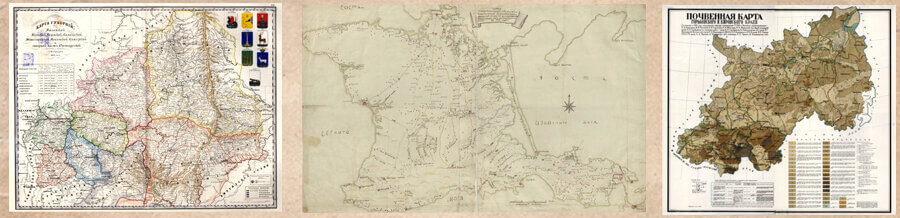

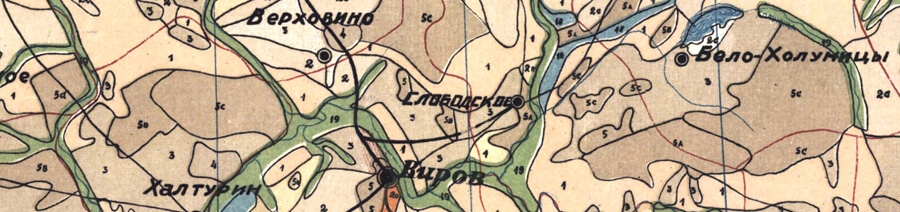
Verbovskiy А. V., Grishin E. S. Geography of Voyages of Louis XI and the Count of Charolais during the Confrontation between the King and the “League of the Public Welfare”
Posted on 30.12.2024 in Number 3, Volume 3 (2024)
Andrey Valerievich Verbovskiy
Donetsk Republican Museum of Local History
Donetsk, Russia
E-mail: verbovskiyy@ro.ru
ORCID: 0000-0001-8097-4953
Evgeniy Sergeevich Grishin
Great Russian Encyclopedia
Moscow, Russia
E-mail: bibliosof-info@yandex.ru
ORCID: 0000-0002-9521-2246
 Download | Back to the Content № 3. 2024
UDC 94(44)«1465»
DOI: 10.58529/2782-6511-2024-3-3-6-21
ABSTRACT. The article is devoted to the events of 1465 in France, when the fate of the future political structure of the kingdom was being decided in the confrontation between the King of France Louis XI and the “League of the Public Welfare”, headed by the Count of Charolais (the future Duke of Burgundy Charles the Bold). A comparison of the itineraries of Louis XI and the Count of Charolais — sources that characterize the implementation of the management strategies of two sovereigns from the Valois dynasty — makes it possible to trace their political activity during a fateful period in the history of the kingdom of lilies. The article, using the mass material of royal ordonnances, analyzes the movements of the French king and his main opponent, the Count of Charolais, in the military and political confrontation. Comparing the routes of Charles and Louis XI on the map allows the authors not only to clarify specific episodes of their confrontation in 1465, but also to give a general assessment of the effectiveness of their actions. A formal description of the King’s struggle with the “League” could be reduced to a few simple facts: the gathering of dissatisfied lords under the leadership of the Count of Charolais, the meeting of the two sides in the Battle of Montlhéry, the victory of the “League” members and the signing of agreements fulfilling their demands. Meanwhile, a detailed analysis of the spatial activity of the King and the Count of Charolais indicates that the former managed to forestall many dangerous situations preventing his opponents from uniting and minimizing the consequences of an unsuccessful outcome of military operations. Thanks to his high and effective mobility, Louis XI managed to reduce the damage caused to him at all stages of the confrontation.
KEYWORDS: France, Louis XI, «League of the Public Welfare», Count of Charolais, Charles the Bold, Philippe de Commines, itinerary, ordonnances, historical cartography, diplomatic relations.
For citation: Verbovskiy A. V., Grishin E. S. [Geography of Voyages of Louis XI and the Count of Charolais during the Confrontation between the King and the “League of the Public Welfare”]. Istoriko-geograficheskiy zhurnal [Historical Geography Journal], 2024, vol. 3, no. 3, pp. 6–21. DOI: 10.58529/2782-6511-2024-3-3-6-21 (In Russian).
Received 15 February 2024
Accepted 11 July 2024
© 2024 The Authors
REFERENCES
- Aseynov R. M. [“Noblesse Debilitée” and “Communauté”: Burgundian Lands in Front of the French Invasion in 1477]. Vestnik RGGU. Seriya: Istoriya. Filologiya. Kul’turologiya. Vostokovedeniye [RGGU Bulletin. Series: History. Philology. Cultural Studies. Oriental Studies], 2014, no. 13 (135), pp. 83–93. (In Russian).
- Bessilin N. A., Sanzharova G. F. [R. A. Maslov on Franco-Burgundian Relations in the Second Half of the 15th Century]. Nauchnyi dialog [Scientific dialogue], 2021, no. 3, pp. 328–346. DOI: https://doi.org/10.24224/2227-1295-2021-3-328-346 (In Russian).
- Bord P. Jean Bâtard d’Orléans (1402–1468): Etude D’un Bâtard Princier dans le Royaume de France au XV siècle. Lille: Université Charles de Gaulle-Lille III, 2019. (In French).
- Brusten C. Les Itinéraires de L’armée Bourguignonne de 1465 à 1478. Publication du Centre Européen d’Études Burgondo-médianes. Bâle: Centre européen d’études bourguignonnes (XIVe — XVIe s.), 1960, vol. 2, pp. 55–67. (In French).
- Cavaillès M., Baudry M.-P. L’enceinte Urbaine de Parthenay. Les enceintes urbaines (XIIIe — XVe siècles). Paris: Éditions du CTHS, 1999, pp. 15–32. (In French).
- Contamin F. Voyna v Sredniye veka [War in the Middle Ages]. Saint Petersburg: Yuventa Publ., 2001. (In Russian).
- Ers J. Lyudovik XI. Remeslo korolya [Louis XI. The King’s Craft]. Moscow: Molodaya gvardiya Publ., 2007. (In Russian).
- Favier J. Le roi René. Paris: Fayard, 2008. (In French).
- Favier J. Louis XI. Paris: Tallandier, 2012. (In French).
- Frizet Y. Louis XI, le roi René et la Provence. Aix-en-Provence: Presses universitaires de Provence, 2015. (In French).
- Grishin E. S., Sanzharov V. A. [Typological Characteristics of the Medieval City of Normandy and Its Functioning in the Political Space of the 14th — 15th Centuries]. Elektronnyy nauchno-obrazovatel’nyy zhurnal “Istoriya” [Electronic Scientific and Educational Journal “History”], 2021, vol. 12, iss. 9 (107). DOI: 10.18254/S207987840017118-8 (In Russian).
- Guicciardini F. Istoriya Italii [History of Italy]. Moscow: Kanon, ROOI “Reabilitatsiya” Publ., 2019, vol. 1. (In Russian).
- Kendall P. M. Louis XI. Paris: Librairie Arthème Fayard, 2014. (In French).
- Le Roy Ladurie E. Istoriya Frantsii. Korolevskaya Frantsiya. Ot Lyudovika XI do Genrikha IV. 1460–1610 [History of France. Royal France. From Louis XI to Henry IV. 1460–1610]. Moscow: Mezhdunarodnyye otnosheniya Publ., 2004. (In Russian).
- Malinin Yu. P. [Philippe de Commines and His “Memoirs”]. Filipp de Kommin. Memuary [Philippe de Commynes. Memoires]. Moscow: Nauka Publ., 1986, pp. 384–437. (In Russian).
- Malinin Yu. P. Frantsiya v epokhu pozdnego srednevekov’ya. Materialy nauchnogo naslediya [France in the Late Middle Ages. Materials of Scientific Heritage]. Saint Petersburg: Izd-vo SpbGU Publ., 2008. (In Russian).
- Maslov R. A. [Louis XI’s Letters as a Source on the History of the Annexation of the Duchy of Burgundy to France]. Vestnik Bashkirskogo universiteta [Bulletin of the Bashkir University], 2005, vol. 10, no. 1, pp. 7–14. (In Russian).
- Murphy N., Small G. Town and Crown in Late 15th-Century France: Rouen after the Réduction, c. 1449–1493. La guerre en Normandie (XIe–XVe siècle). Caen: Presses universitaires de Caen, 2018, pp. 309–331. (In English).
- Nikolaeva I. Yu. Polidistsiplinarnyy sintez i verifikatsiya v istorii [Polydisciplinary Synthesis and Verification in History]. Tomsk: Izd-vo Tomskogo gos. un-ta Publ., 2010. (In Russian).
- Sanzharov V. A. [Complex Digital Model of Parallel Franco-Burgundian Itineraries (Louis XI, Philip The Good and Charles The Bold) as a Tool for Studying Governance Institutions, Military-Political and Diplomatic Activity]. Istoricheskiye issledovaniya v kontekste nauki o dannykh: informatsionnyye resursy, analiticheskiye metody i tsifrovyye tekhnologii [Historical Research in the Context of Data Science: Information Resources, Analytical Methods and Digital Technologies]. Moscow: MAKS Press, 2020, pp. 311–316. (In Russian).
- Sanzharov V. A., Bessilin N. A. [Alliance or conflict? French Monarchy and the City of Burgundy under Louis XI]. Mir Evrazii: ot drevnosti k sovremennosti. Sbornik materialov Vseros. nauch.-prakt. konf. [The World of Eurasia: From Antiquity to Modernity. Collection of Materials of the All-Russian scientific and practical Conf.]. Ufa: RITs BashGU Publ., 2021, vol. 1, pp. 19–29. (In Russian).
- Sanzharov V. A., Smagin M. R., Filippova E. B. [The Capabilities Statistical Processing of the Digitized Data Based on the Material of Louis’s XI Itinerary (1461–1483)]. Mir Evrazii: ot drevnosti k sovremennosti. Sbornik materialov Vseros. nauch.-prakt. konf. [The World of Eurasia: From Antiquity to Modernity. Collection of Materials of the All-Russian scientific and practical Conf.]. Ufa: RITs BashGU Publ., 2020, vol. 1, pp. 141–146. (In Russian).
- Stein H. Charles de France, Frère de Louis XI. Paris: А. Picard, 1919. (In French).
- Tsaturova S. K. Formirovaniye instituta gosudarstvennoy sluzhby vo Frantsii XIII–XV vekov [Formation of the Institute of Civil Service in France in the 13th–15th Centuries]. Moscow: Nauka Publ., 2012. (In Russian).
- Verbovsky A. V. [Places of Stay of the Royal Courtat Louis XI — Preliminary Results of the Analysis by Royal Ordinances]. Gumanitarnyy vestnik (Gorlovka) [Humanitarian Bulletin (Gorlovka)], 2017, iss. 4, pp. 12–18. (In Russian).
- Verbovsky A. V. [The Policy of Louis XI and Charles the Bold on the Apennine Peninsula in the Works of Philippe de Commines and Niccolo Machiavelli]. Mir Evrazii: ot drevnosti k sovremennosti. Sbornik materialov Vseros. nauch.-prakt. konf. [The World of Eurasia: From Antiquity to Modernity. Collection of Materials of the All-Russian scientific and practical Conf.]. Ufa: RITs BashGU Publ., 2020, vol. 1, pp. 119–127. (In Russian).
- Verbovsky A. V. [The Second Kingdom of Valois: A Short Step Away from Creating Great Burgundy]. Mir Evrazii: ot drevnosti k sovremennosti. Sbornik materialov Vseros. nauch. konf. [The World of Eurasia: From Antiquity to Modernity. Collection of Materials of the All-Russian Sci. Conf.]. Ufa: RITs BashGU Publ., 2019, vol. 1, pp. 46–55. (In Russian).
- Walsh R. J. Charles the Bold and Italy (1467–1477): Politics and Personnel. Liverpool: Liverpool University Press, 2005. (In English).
Litskevich O. V. “Radivil’s” Border between the Grand Duchy of Lithuania and Livonia from the Baltic Sea to the Western Dvina River according to the 1529, 1541 and 1542 Accounts
Posted on in Number 3, Volume 3 (2024)
Oleg V. Litskevich
Independent researcher
Minsk, Belarus
E-mail: litz@rambler.ru
ORCID: 0009-0008-9959-1627
Download | Back to the Content № 3. 2024
UDC 94(474.5)«1529/1542»:913
DOI: 10.58529/2782-6511-2024-3-3-22-47
ABSTRACT. “Radivil’s” border between the Grand Duchy of Lithuania (GDL) and the Livonian branch of the Teutonic Order was demarcated in 1474–1477 in accordance with the delimitation treaty concluded in 1473. The most important sources for reconstructing the line of this border, in addition to the 1473 treaty itself, are its descriptions made in the 16th century. These are the description of 1529, included in Book 223 of the Lithuanian Metrica, the protocol of demarcation of 1541, known in two Latin-language copies and a translation into Old Polish, and the descriptions of 1542, included in Books 559 and 560 of the Lithuanian Metrica. The article presents an analytical commentary on these sources concerning the section of the border of the GDL with Livonia from the Baltic Sea to the Western Dvina River. Most of the main control points of these descriptions (i.e. toponyms and hydronyms) are localized with reference to topographic maps. Boundary lines reflected in these sources are compared, including those with the modern state borders of Belarus, Lithuania and Latvia. It is concluded that all of the above sources describe “Radivil’s” border as a real physical object, referring to its border markers, and the 1542 descriptions also mention infrastructural objects that remained after the demarcation of “Radivil’s” border (e.g., camp sites of demarcation commission). The boundary line in the 1529 and 1542 descriptions is virtually identical in most sections, except for the sections from the source of the Dobe River to the confluence of the Suseja River with the Memele River and southwest of the Livonian castle of Bauska. There is a significant coincidence of “Radivil’s” border, reflected in the accounts of 1529, 1541 and 1542, with the modern state borders between Lithuania and Latvia and between Belarus and Latvia.
KEYWORDS: borders, borderland, Livonia, Lithuania, Latvia, Teutonic Order, demarcation, delimitation, Lithuanian Metrica.
For citation: Litskevich O. V. [“Radivil’s” Border between the Grand Duchy of Lithuania and Livonia from the Baltic Sea to the Western Dvina River according to the 1529, 1541 and 1542 Accounts]. Istoriko-geograficheskiy zhurnal [Historical Geography Journal], 2024, vol. 3, no. 3, pp. 22–47. DOI: 10.58529/2782-6511-2024-3-3-22-47 (In Russian).
Received 23 April 2024
Accepted 13 August 2024
© 2024 The Author
REFERENCES
- Alexandrowicz S. [Map of the Grand Duchy of Lithuania by Tomasz Makowski from 1613, the So-Called “Radziwii”, as a Source for the History of Lithuania and Belarus]. Studia Źródłoznawcze. Commentationes [Source Studies. Commentationes], 1965, vol. 10, pp. 33–67. (In Polish).
- Alexandrowicz S. Kartografia Wielkiego Księstwa Litewskiego od XV do połowy XVIII wieku [Cartography of the Grand Duchy of Lithuania from the 15th to the Mid-18th Century]. Warsaw: Instytut Historii Nauki PAN Publ., 2012. (In Polish).
- Auns M. [The Border between Livonia and Braslava Districts]. Latvijas Zinātņu Akadēmijas Vēstis. A daļa [Bulletin of the Academy of Sciences of Latvia. Part A], 2008, no. 3/4, pp. 27–33. (In Latvian).
- Bessudnov D. A. Baltiyskaya politika Pol’shi i Litvy v seredine XVI v.: kand. dis. [Baltic Policy of Poland and Lithuania in the Mid-16th Century: Diss. Cand.]. Saint Petersburg, 2017. (In Russian).
- Brastiņš E. Latvijas pilskalni. IV. Vidzeme [Latvian Mounds. IV. Vidzeme]. Riga: Pieminēklu Valdes izdevums Publ., 1930. (In Latvian).
- Bucevičiūtė L. Lietuvos Didžioji Kunigaikštystė XV–XVI a.: valstybės erdvės ir jos sienų samprata [The Grand Duchy of Lithuania of 15th–16th Centuries: The Concept of State Space and Its Borders]. Kaunas; Vilnius: Vytauto Didžiojo universitetas, Versus aureus Publ., 2015. (In Lithuanian).
- Čelkis T. Lietuvos Didžiosios Kunigaikštystės teritorija: sienų samprata ir delimitaciniai procesai XIV–XVI amžiuje [The Territory of the Grand Duchy of Lithuania: The Concept of Borders and Delimitation Processes in the 14th–16th Centuries]. Vilnius: Vilniaus universiteto leidykla Publ., 2014. (In Lithuanian).
- Čelkis T., Antanavičius D. [Inspection of the Border between Livonia and the Grand Duchy of Lithuania in 1545 (Report by Livonian Officials)]. Lietuvos istorijos studijos [Lithuanian History Studies], 2011, no. 27, pp. 164–178. (In Lithuanian).
- Čeļķis T., Jakulis M. [The Border Agreement Concluded in 1541 between the Lithuanian Dižkunigaitija and the Livonian Branch of the Teutonic Order]. Latvijas Vēstures Institūta Žurnāls [Journal of the Institute of Latvian History], 2024, no. 1 (121), pp. 120–141. (In Latvian).
- Dorna M. [Act of Lithuanian-Livonian Delimitation of July 7, 1473]. Lituano-Slavica Posnaniensia, 2013, vol. 14, pp. 87–102. (In Polish).
- Dziarnovich A. I. “…in nostra Livonia”. Dakumientaĺnyja krynicy pa historyi palityčnych adnosinaŭ pamiž Vialikim Kniastvam Litoŭskim i Livonijaj u kancy XV — pieršaj palovie XVI stst.: sistematyzacyja i aktavy analiz [“…in nostra Livonia”. Documentary Sources on the History of Political Relations between the Grand Duchy of Lithuania and Livonia in the Late 15th — First Half of the 16th Centuries: Systematization and Act Analysis]. Minsk: ATHENAEUM Publ., 2003, vol. 1. (In Belarussian).
- Litskevich A. U. [Old Belarusian Documents of the 15th Century from the Central Archives of Historical Records in Warsaw] Zdabytki. Dakumientaĺnyja pomniki na Bielarusi [Proceedings. Documentary Monuments in Belarus]. Minsk: Nac. bibl. Bielarusi Publ., 2009, iss. 11, pp. 6–41. (In Belarussian).
- Litskevich O. V. [The Oldest Sections of the Belarusian-Latvian Border as a Historical and Cultural Value (Towards the Formulation of the Problem)]. Okhrana i populyarizatsiya kul’turnogo naslediya: mirovoy i otechestvennyy opyt. Materialy mezhdunar. nauch.-praktich. konf. Vitebsk, 22–23 oktyabrya 2021 g. [Protection and Popularization of Cultural Heritage: World and Domestic Experience. Proceedings of the International Sci. and Practical Conf. Vitebsk, October 22–23, 2021]. Vitebsk: VGU imeni P. M. Masherova Publ., 2021, pp. 102–108. (In Russian).
- Litskevich O. V. [Delimitations and Demarcations of the Grand Duchy of Lithuania’s Border with Livonia in the 14th And 15th Centuries: The Problem of Sources]. Nauchnyye trudy Respublikanskogo instituta vysshey shkoly. Istoricheskiye i psikhologo-pedagogicheskiye nauki [Scientific Works of the Republican Institute of Higher Education. Historical And Psychological-Pedagogical Sciences], 2022, iss. 22, part 1, pp. 313–322. (In Russian).
- Litskevich O. V. [Polotsk-Livonian Border in the 13th–15th Centuries]. Granitsa i pogranich’ye [Border and Frontier], 2022, no. 2, pp. 5–30. (In Russian).
- Litskevich O. V. [The Process of Demarcation of the Border of the Grand Duchy of Lithuania with the Teutonic Order in 1422–1426]. Sotsial’no-gumanitarnyye znaniya: materialy 19th Respublikan. nauch. konf. molodykh uchenykh i aspirantov. Minsk, 30 noyabrya 2022 g. [Social and Humanitarian Knowledge: Materials of the 19th Republican Sci. Conf. of Young Scientists and Graduate Students. Minsk, November 30, 2022]. Minsk: RIVSh Publ., 2022, pp. 60–64. (In Russian).
- Litskevich O. V. [Maps of the Late 15th — Early 17th Centuries as a Source on the History of the Border and Borderland between the Grand Duchy of Lithuania and Livonia]. Aktual’nyye problemy istochnikovedeniya. Materialy VII Mezhdunarodnoy nauch.-praktich. konf. Vitebsk, 27–29 aprelya 2023 g.: v 2 t. [Current Problems of Source Studies. Proceedings of the 7th International Sci. and Practical Conf. Vitebsk, April 27–29, 2023: in 2 vols]. Vitebsk: VGU imeni P. M. Masherova Publ., 2023, vol. 1, pp. 204–207. (In Russian).
- Litskevich O. V. [The 559th Book of Lithuanian Metrics: Composition and Geographical Content]. Materyjaly XIX Mižnarodnych knihaznaŭčych čytanniaŭ. Minsk, 27–28 krasavika 2023 h. [Materials of the 19th International Bibliographic Readings. Minsk, April 27–28, 2023]. Minsk: Nacyjanaĺnaja biblijateka Bielarusi Publ., 2023, pp. 31–36. (In Russian).
- Litskevich O. V. [The Treaty of the Grand Duchy of Lithuania with Livonia on the Delimitation of the Border of July 7, 1473: History of Preparation, Commentary, Trnslation]. Granitsa i pogranich’ye [Border and Frontier], 2023, no. 1 (3), pp. 8–28. (In Russian).
- Litskevich O. V. [The Border of the Grand Duchy of Lithuania with Livonia in the Area of Drisviaty and Braslav (1426)]. Vestnik Polotskogo gosudarstvennogo universiteta. Seriya A. Gumanitarnyye nauki [Herald of Polotsk State University. Series A. Humanity Science], 2024, no. 1 (69), pp. 29–34. DOI: 10.52928/2070-1608-2024-69-1-29-34 (In Russian).
- Makarov M. D., Latushkin A. M. [The 1560 Map of the Infliants from the Funds of the National Historical Archive of Belarus]. Archivaryus: zbornik navukovych paviedamlienniaŭ i artykulaŭ [Archivist: Collection of Scientific Reports and Articles]. Minsk: NHAB Publ., 2022, iss. 20, pp. 15–20. (In Belarussian).
- Popov V. E., Filyushkin A. I. [Coadjuter’s War and Pozvol Treaties of 1557]. Studia Slavica et Balcanica Petropolitana, 2009, no. 1/2 (5/6), pp. 151–184. (In Russian).
- Ryčkov A., Vasiliauskas E. [The 1529 the Grand Duchy of Lithuania and Livonia Description of the Wall]. Istorija [History], 2022, vol. 127, no. 3, pp. 104–131. (In Lithuanian).
- Varakauskas R. Lietuvos ir Livonijos santykiai XIII–XVI a. [Relations between Lithuania and Livonia in the 13th–16th Centuries]. Vilnius: Mokslas Publ., 1982. (In Lithuanian).
- Vasiliauskas E. [Map of the 1585 border of the Duchy of Kurzeme and Zemgale and the Grand Duchy of Lithuania in the National Archives of Sweden]. Latvijas vēstures institūta žurnāls [Journal of the Institute of Latvian History], 2023, no. 1 (118), pp. 117–136. (In Latvian).
- Yakovleva M. Kurzemes hercogistes pārvalde, teritorija, robežas un metālieguves manufaktūras (1561–1795). Promocijas darbs [Administration, Territory, Borders and Metal Smelting Manufactories of the Duchy of Kurzeme (1561–1795). Doct. Diss.]. Riga, 1999. (In Latvian).
- Yakovleva M. Territorium und Grenzen des Herzogtums Kurland und Semgallen im 16. und 17. Jahrhundert. Das Herzogtum Kurland 1561–1795: Verfassung, Wirtschaft, Gesellschaft. Lüneburg: Verlag Nordostdeutsches Kulturwerk, 2001, vol. 2, pp. 69–104. (In German).
- Yevstratiev O. I. [The Formation of the Southern Border of the Duchy of Courland in the Second Half of the 16th Century]. Studia historica Europae Orientalis. Issledovaniya po istorii Vostochnoy Evropy [Studia Historica Europae Orientalis. Studies on the History of Eastern Europe], 2015, iss. 8, pp. 147–164. (In Russian).
Grishin E. S., Krutov D. A. The Practice of Composing Regional Complex Historical Atlases
Posted on 12.05.2023 in Number 1, Volume 2 (2023)
Evgeniy S. Grishin
Institute of History and Archaeology, Ural Branch of the Russian Academy of Sciences
Ekaterinburg, Russia
E-mail: bibliosof-info@yandex.ru
ORCID: 0000-0002-9521-2246
Dmitriy A. Krutov
Institute of History and Archaeology, Ural Branch of the Russian Academy of Sciences
Ekaterinburg, Russia
E-mail: krutovdmitry999@gmail.com
ORCID: 0000-0002-5513-663X
Download | Back to the Content № 1. 2023
UDC 912.44:930.2
DOI: 10.58529/2782-6511-2023-2-1-44-59
ABSTRACT. This article is devoted to the methodology and practice of composition of regional complex historical atlases on the example of historical and thematic mapping of the Crimean Peninsula as part of the Taurida Governorate. As part of a comparative analysis of the distinctive features of regional complex historical atlases the authors presents representative examples of regional and national mapping in the second half of the 20th century which contributed to the emergence of a niche for national historical atlases. The practice of composition of national historical atlases promoted to the noticeable development of historical cartographic research, but it does not allow to solve the problem of continuity and coherence of historical maps of different themes qualitatively due to its specificity. Regional complex historical atlases can more accurately convey spatial information of various themes owing to more stable mapping object within their boundaries and the vastness of the source base at the polyscale level. Crimea (1768–1917) was chosen as a representative object for compositing the regional complex historical atlas due to the diversity of the peninsula’s geographical environment, dynamic socio-economic and demographic processes and the presence of a wide base of various primary sources from statistical reviews to travelers’ reports. The main theoretical approaches to the grouping of maps and sections, potential topics of regional historical mapping and possible typological solutions for their representation were highlighted based on the structure of the Crimea atlas. Particular attention is paid to the problems of navigation and review of such atlases, which should consider the specifics of the theoretical composition and content of regional historical maps.
KEYWORDS: regional complex historical atlas, Crimean Peninsula, thematic mapping, atlas structure, scale levels, map typology, atlas review
For citation: Grishin E.S., Krutov D.A. The Practice of Composing Regional Complex Historical Atlases // Historical Geography Journal. 2023. Vol. 2. № 1. P. 44–59.
REFERENCES
- Bilich Yu. S., Vasmut A. S. Proyektirovaniye i sostavleniye kart [Design and Composition of Maps]. Moscow: NedraPubl., 1984. (In Russian).
- Garaevskaya L. S. Redaktirovaniye melkomasshtabnykh kart i atlasov [Editing of Small-Scale Maps and Atlases]. Moscow: Nedra Publ., 1966. (In Russian).
- Grishin E. S., Umansky L. A. [Methodological Foundations of Regional Historical Mapping Based on the Material of a Unified Digital Model of the European Part of the Russian Empire]. Istoriko-geograficheskiy zhurnal [Historical Geography Journal], 2022, vol. 1, no. 1, pp. 6–29. DOI: 10.58529/2782-6511-2022-1-1-6-29 (In Russian).
- Kompleksnyye regional’nyye atlasy [Complex Regional Atlases]. Moscow: Izd-vo Moskovskogo un-ta Publ., 1976. (In Russian).
- Leontiev N. F. Tematicheskaya kartografiya [Thematic Cartography]. Moscow: Nauka Publ., 1981. (In Russian).
- Sotsial’no-ekonomicheskiye karty v kompleksnykh regional’nykh atlasakh [Socio-Economic Maps in Complex Regional Atlases]. Moscow: Izd-vo Moskovskogo un-ta Publ., 1968. (In Russian).
- Vostokova A. V. Oformleniye kart [Design of Maps]. Moscow: Izdatel’stvo MGU Publ., 1985. (In Russian).
Avilova A. S. Composing Retrospective Climatic Maps of the Regional Level Based on Monitoring Data from the 19th Century on the Example of Crimea as Part of the Russian Empire
Posted on in Number 1, Volume 2 (2023)
Anna S. Avilova
Institute of History and Archaeology, Ural Branch of the Russian Academy of Sciences
Ekaterinburg, Russia
E-mail: annriver@mail.ru
ORCID: 0009-0007-5981-9431
Download | Back to the Content № 1. 2023
UDC 94(477.75):528.92
DOI: 10.58529/2782-6511-2023-2-1-60-77
ABSTRACT. The article’s main topic is the ways of compiling retrospective (historically oriented) climate maps based on the monitoring data of meteorological stations of the 19th — early 20th centuries. To solve the problem, the author provides a review of sources that contain data on the climate of the Russian Empire in the 19th century. First of all, these are monitoring tables with various indicators: local temperature, precipitation and other information. The complexity of working with these sources and their poor demand in modern historiography are indicated. In view of the importance of climate in studying the development of a territory, its factor must be taken into account when studying various processes; hence, the need arises for the composition of original retrospective climate maps based on the data available from the sources. As a reference material, data on the climate of the Taurida province are used, on the basis of which maps of the average temperatures of January and July in the territory of Crimea were compiled. Due to the uneven distribution of monitoring stations on the peninsula, the author describes the course of his actions in calculating the temperature gradient and establishing temperature values at additional points. This makes it possible to compose isotherm maps. In these calculations, an important role belongs to the relief, which is especially important for the specifics of the Crimean region. The author also points out other factors in the formation of air temperature, including the role of water masses as a solar heat accumulator. Further actions are outlined for the construction of precipitation maps and the use of a set of climatic maps in historical and geographical research.
KEYWORDS: climate maps, retrospective mapping, climate sources
For citation: Avilova A. S. Composing Retrospective Climatic Maps of the Regional Level Based on Monitoring Data from the 19th Century on the Example of Crimea as Part of the Russian Empire // Historical Geography Journal. 2023. Vol. 2. № 1. P. 60–77.
REFERENCES
- Anisimov M. V., Byshev V. I., Zalesny V. B., Moshonkin S. N., Neiman V. G., Romanov Yu. A., Serykh I. V. [On Inter-Decadal Climate Oscillations in the North-Atlantic Region]. Sovremennyye problemy distantsionnogo zondirovaniya Zemli iz kosmosa [Current Problems in Remote Sensing of the Earth from Space], 2012, vol. 9, no. 2, pp. 304–311. (In Russian).
- Anichkina N. V., Rostom G. R. [The Degree of Influence of Ocean Surface Currents on Adjacent Land Climate]. Uspekhi sovremennogo yestestvoznaniya [Advances in Current Natural Sciences], 2016, no. 12-1, pp. 122–126. (In Russian).
